 100% Australian owned

What is a Hovercraft?
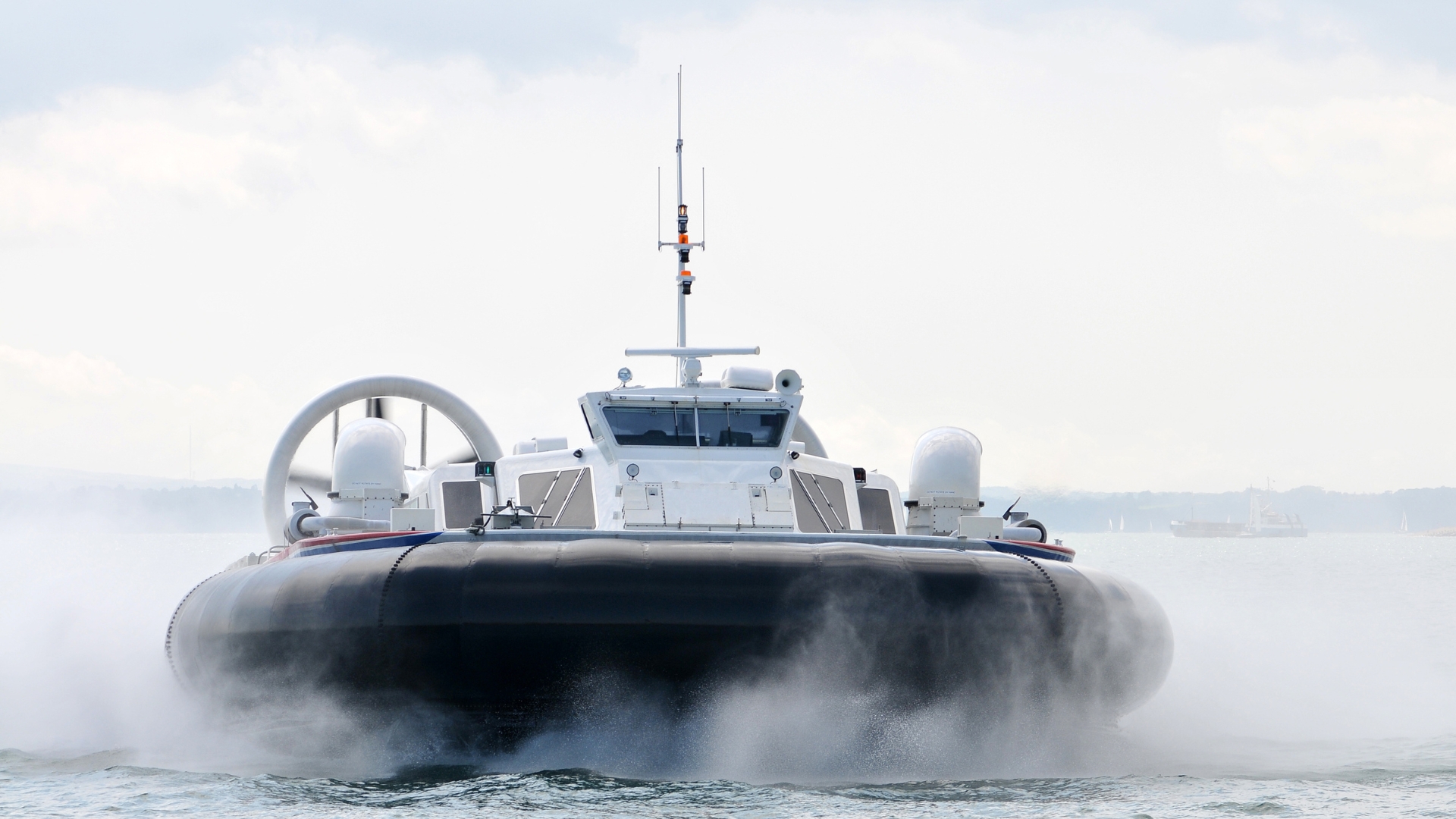
A Hovercraft aka Air cushion Vehicle (ACV) is a vehicle that can go on Mud, Water and Land. They use a large volume of air below the hull to fill up the skirt and also move.
The hovercraft was invented by Christopher Sydney Cockerell. It was invented in 1955 and the first one was launched On June 11, 1959 off the coast of England.
How does a hovercraft work ?
A hovercraft is a vehicle that glides over a smooth surface by riding on a cushion of air, it is also called an air-cushion vehicle, or ACV. How is the air cushion made, and how does it allow the vehicle to glide over it so freely? Vents or currents of slow-moving, low-pressure air are ejected downward against the surface below the hovercraft. Modern ACVs often have propellers on top that create the air currents. These currents are pushed beneath the vehicle with the use of fans. Surrounding the base of the ACV is a flexible skirt, also called the curtain, which traps the air currents, keeping them underneath the hovercraft. The trapped air currents can create an air cushion on any smooth surface, land or water! The cushion greatly reduces friction, allowing the vehicle to glide freely over the smooth surface below.
Did you learn the concepts of :
Air
Friction
Engineering
Aerodynamics
Some fun Facts :
1. Christopher Sydney Cockerell was able to start selling the Hovercraft to the British Military in 1955 as a military secret.
2. 80 million people used it to cross the Channel before they were taken out of service in 2000 because of competition from the Channel Tunnel and newer ‘super ferries.’
3. In 1958 Cockerell was able to convince the National Research Development Corporation to fund development of a full-scale model.
4. It took great effort for Cockerell to get his invention taken seriously.
5. The SRN1 made its first hover on 11 June 1959, and made its famed successful crossing of the English Channel on 25 July 1959 piloted by Peter (“Sheepy”) Lamb, an ex-naval test pilot and the Chief Test Pilot at Saunders Roe.
6. Although the SR.N1 was successful as a test bed, the design hovered too close to the surface, even small waves would hit the bow.
7. It travels at speeds up to 160km/h (100mph).
8. These fans blow air underneath the hovercraft to cause it to lift off of the ground. To move, hovercrafts need engine power to produce an air current that will push it forward.
9. Hovercraft are hybrid vessels operated by a pilot as an aircraft.
10. A flexible skirt, also called the curtain, traps air allowing the Hovercraft to float.